
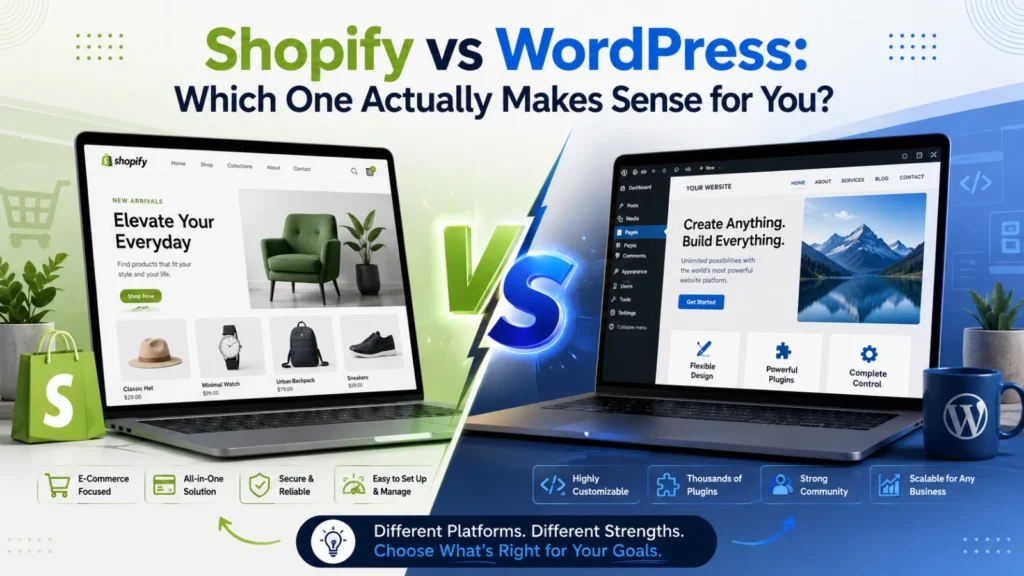
There’s no universal winner between Shopify and WordPress. Each was built with a different priority in mind. The right choice depends entirely on what your business actually needs. Here’s how they actually differ, beyond the marketing pitch.
What Shopify Is Actually Built For
Shopify is a hosted platform built specifically for selling products online. It handles hosting, security, payments, and inventory in one package. Setup is fast, even without any coding experience required. Its app ecosystem adds extra features without needing custom development work.
What WordPress Is Actually Built For
WordPress is a flexible content management system, not just a store platform. With the WooCommerce plugin, it can run a full online store too. It’s self-hosted, meaning you control the server and configuration directly. This flexibility comes with more setup and ongoing maintenance responsibility.
Ease of Setup and Day-to-Day Maintenance
Shopify wins clearly on initial setup speed and simplicity. Most stores can launch within days, without technical help required. WordPress typically takes longer to configure, especially with WooCommerce added. It also needs regular updates to plugins, themes, and the core software.
Comparing the Real Cost Structure
Shopify charges a recurring subscription, plus transaction fees on many plans. Costs stay predictable, but scale up as you add premium features. WordPress has lower baseline costs but variable expenses for hosting and developers. Custom functionality on WordPress often means paying for development work directly.
Customization and Design Flexibility
WordPress offers far more flexibility for unique layouts and custom functionality. Its plugin ecosystem covers nearly every feature imaginable, for a price. Shopify offers solid design options but works within a more fixed structure. Highly custom storefronts are possible on Shopify, but usually cost more to build.
Content Marketing and Blogging Strength
WordPress was built as a content platform first, and it shows. Its blogging and content tools are genuinely stronger than Shopify’s built-in options. Businesses relying heavily on content marketing often prefer WordPress for this reason. Shopify’s blog features work, but they’re clearly secondary to its store tools.
SEO Considerations Worth Knowing
Both platforms can rank well with proper setup and effort. WordPress offers deeper control over technical SEO details and page structure. Shopify has improved significantly here, but still offers less granular control. For content-heavy SEO strategies, WordPress typically provides more flexibility.
Security and Ongoing Responsibility
Shopify handles security, updates, and server maintenance on your behalf entirely. This suits businesses that want to avoid technical management responsibilities. WordPress puts that responsibility on you, or whoever manages your site. That control is valuable, but it requires consistent attention and expertise.
Which One Actually Fits Your Situation
Choose Shopify if selling products is your main, singular business focus. Choose Shopify if you want speed and minimal technical management overhead. Choose WordPress if content, blogging, or unique design matters just as much. Choose WordPress if you want long-term flexibility and full platform control.
The Bottom Line
Shopify and WordPress solve different problems, not the same one differently. Shopify prioritizes speed, simplicity, and dedicated e-commerce functionality out of the box. WordPress prioritizes flexibility, content strength, and long-term customization potential instead. The right choice depends on your priorities, not which platform is objectively better.
Frequently Asked Questions
Is Shopify easier to use than WordPress for beginners?
Generally, yes. Shopify requires less technical knowledge to set up and manage. WordPress offers more control, but with a steeper learning curve.
Can WordPress handle a large online store effectively?
Yes, with proper hosting and configuration, WordPress scales well. Larger stores may need more technical planning than Shopify requires.
Is Shopify more expensive than WordPress overall?
It depends on your needs. Shopify has predictable subscription costs and transaction fees. WordPress costs vary based on hosting, plugins, and development work.
Which platform is better for SEO specifically?
Both can perform well with proper setup and effort. WordPress generally offers deeper technical control over SEO details.
Do I need coding knowledge to use either platform?
Not necessarily for basic use, especially with Shopify. WordPress customization often benefits from at least some technical knowledge.
Can I switch from one platform to the other later?
Yes, but migration takes planning and effort, especially for larger stores. It’s easier to choose carefully upfront than to switch later.
