
Most businesses judge a website by how it looks on launch day. Few think about how it performs once traffic and features grow. That long-term performance depends on something invisible: the tech stack behind it. Here’s how to choose one without guessing.
What a Tech Stack Actually Includes
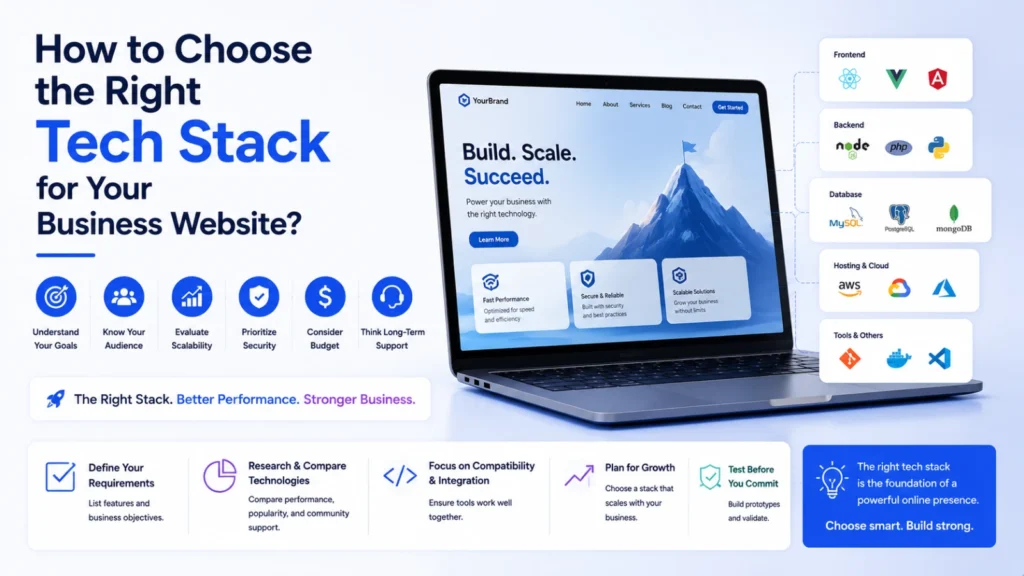
A tech stack is the combination of technologies powering a website. The frontend controls layout, navigation, and everything a visitor directly interacts with. The backend handles logic like form processing and user authentication behind the scenes. The database stores content, orders, and records, affecting both speed and safety. Hosting determines where the site lives and how well it handles traffic. Third-party services add tools like payments, analytics, and booking systems on top.
Start With Business Goals, Not Technology Trends
Technology should support what a business actually needs, not complicate it. Before choosing anything, clarify what the website is really meant to achieve. Is it generating leads, selling products, taking bookings, or sharing information? Will content change often, and who will manage updates afterward? A simple service site needs far less than a platform handling transactions. Budget and timeline also shape which setups make practical sense.
Let Website Type Guide the Decision
Corporate websites prioritize trust and clarity, needing stable platforms that are easy to update. Service-based websites lean on speed, mobile usability, and simple inquiry forms. E-commerce websites need secure payments, inventory handling, and reliable checkout flows. Content-heavy sites depend on efficient content management and consistent performance. Custom platforms need flexibility and structured development to support future growth. Matching the stack to the website type avoids unnecessary complexity from the start.
Common Tech Stacks Used for Business Websites Today
WordPress with HTML, CSS, and JavaScript suits small to medium business sites well. It offers easy content updates and a large plugin ecosystem. MERN (MongoDB, Express, React, Node.js) fits custom, interactive platforms needing real-time features. MEAN (MongoDB, Express, Angular, Node.js) suits larger, data-heavy applications with structured roadmaps. Laravel with MySQL works well for platforms needing secure, structured backend logic. Django with PostgreSQL or MySQL suits data-driven platforms needing clean, reliable architecture. React or Next.js with a headless CMS favors speed-focused, content-flexible modern websites. No single stack wins universally; fit matters more than popularity.
Frontend Choices That Shape User Experience
The frontend determines how visitors experience a site within seconds of arriving. Slow pages or confusing layouts push visitors away almost immediately. Page speed, mobile responsiveness, and clear structure all matter here directly. Simpler frontend setups often serve business websites better than heavy frameworks. Reserve complex frameworks for situations that genuinely require advanced interactivity.
Backend and Database Decisions That Support Stability
A reliable backend quietly handles requests without visitors ever noticing it working. Popular backend languages include PHP, JavaScript, and Python, each with tradeoffs. Choose one with enough available developer support to maintain long term. For databases, structured data like orders usually fits SQL systems well. Flexible, interactive platforms often benefit more from NoSQL database structures instead. Security updates and backups should be planned from the very beginning.
Hosting Decisions That Affect Real-World Performance
Even a well-built website can feel slow if hosting is inadequate. Shared hosting suits low-traffic sites; cloud hosting suits growing businesses better. Managed hosting reduces technical workload for teams without in-house expertise. Server location, content delivery networks, and backup support all matter too. Hosting should always align with the chosen tech stack to avoid problems.
Planning for Growth, Security, and Future Flexibility
A website should support growth instead of resisting it over time. Traffic increases and new features should fit without requiring a full rebuild. Flexible architecture allows one part to update without disrupting everything else. Security planning, including encryption and access control, protects both business and users. Planning for flexibility early prevents forced, expensive rebuilds down the road.
Weighing Cost Beyond the Initial Launch
The launch invoice is only part of a website’s real, total cost. Ongoing hosting, updates, third-party tools, and support all add up over time. Some stacks are cheap to build but expensive to maintain long term. Others cost more upfront but create fewer ongoing issues afterward. Switching tech stacks later is often disruptive and considerably more expensive. Realistic long-term planning consistently leads to smarter technology decisions.
The Bottom Line
There’s no single best tech stack that fits every business equally well. The right choice depends on goals, website type, budget, and future plans. A well-planned stack keeps a website reliable, manageable, and genuinely ready for growth. Rushed technology decisions tend to create higher costs and real limitations later. Careful planning now turns a website into a durable, valuable business asset.
Frequently Asked Questions
What’s the single most important factor in choosing a tech stack?
Business goals matter most, more than trends or popularity. The right stack should match what your website actually needs.
Is WordPress still a solid choice for a business website?
Yes, especially for small to medium websites. It supports easy updates and a large ecosystem of plugins.
How does website type affect the right tech stack choice?
Different website types place pressure on different technical areas. E-commerce, content sites, and portals each need different foundations.
Does hosting really matter as much as the tech stack itself?
Yes. Poor hosting can make even a well-built website feel slow. Hosting should always align with the chosen stack.
Can I switch tech stacks later if my business needs change?
It’s possible, but often disruptive and costly. Planning for flexibility early avoids forced, expensive rebuilds later.
Should cost or long-term reliability guide the final decision?
Both matter, but long-term reliability usually outweighs initial savings. Cheap setups can become expensive through ongoing maintenance issues.
