
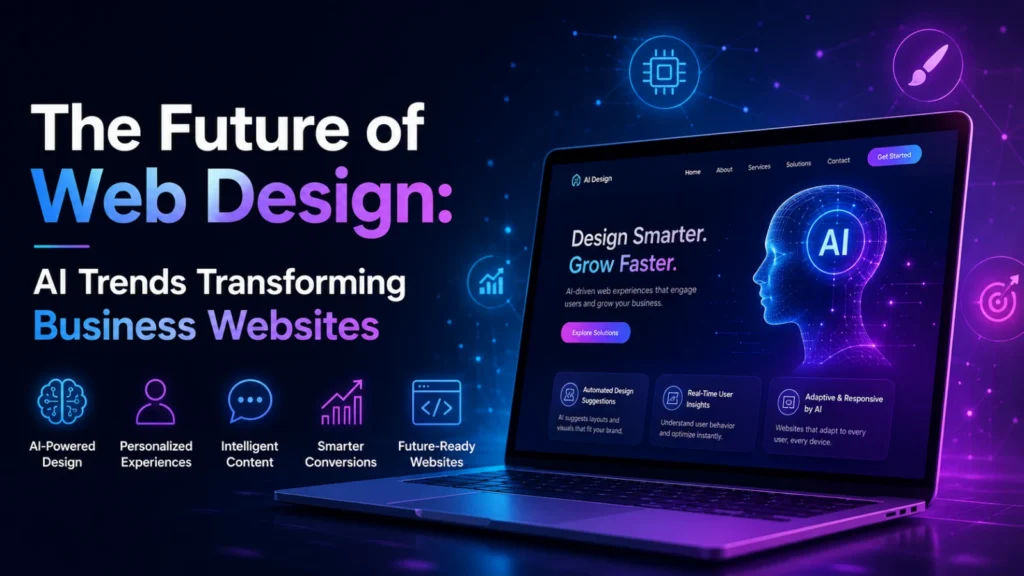
A website used to be a static digital brochure, built once and left alone. That approach no longer holds up in a competitive digital market. AI is now reshaping how business websites are built, tested, and improved. Here’s a look at the trends actually driving that shift.
Personalization Is Becoming the Default, Not the Exception
Generic websites built for everyone often connect with no one specifically. AI now lets a website adjust content based on real visitor behavior. What a visitor clicks, skips, or lingers on can shape what appears next. This turns a static page into something that feels genuinely relevant instantly.
Businesses serving different audiences, industries, or service types benefit most from this shift. A healthcare provider, retailer, and B2B company all need different visitor journeys. Personalization lets one website serve multiple audiences without feeling generic to any of them. That single change often improves engagement more than any redesign alone.
AI Is Speeding Up Design Without Replacing Designers
Design workflows have changed noticeably over the past few years. AI tools now assist with layout suggestions, accessibility checks, and image formatting quickly. Early-stage wireframing, once slow and manual, now moves considerably faster with AI support.
This doesn’t remove the need for skilled designers and developers at all. Strategic decisions around brand, audience, and business goals still need human judgment. What AI actually handles is the repetitive groundwork consuming time. That shift lets teams focus energy on decisions that genuinely shape outcomes.
Responsive Design Has Become Fully Non-Negotiable
Mobile browsing dominates internet use across most modern markets today. A website that only performs well on desktop quietly loses real customers. AI tools now test responsiveness across huge numbers of device configurations rapidly. That kind of testing used to take manual teams considerably longer to complete.
Search engines also weigh mobile performance directly into ranking decisions. A site that behaves consistently across devices holds a clear competitive advantage. Businesses ignoring this basic standard are increasingly at a real disadvantage.
Better Data Is Producing Genuinely Smarter Design Decisions
AI doesn’t just help build a website; it helps improve it continuously afterward. Heatmaps, session recordings, and conversion data reveal patterns manual review often misses. This shifts redesign decisions away from opinion and toward measurable evidence instead.
Pages that perform well get identified and replicated elsewhere on the site. Pages that quietly lose visitors get flagged and fixed earlier than before. For businesses wanting real results, this evidence-based approach matters significantly more than guesswork.
AI Is Reshaping How SEO and Web Design Intersect
Search engines increasingly understand content context, not just keyword frequency alone. A page stuffed with keywords but poorly structured often underperforms regardless. Clear structure, fast load times, and relevant content now matter far more.
AI tools assist with the technical side of this shift directly. They flag crawl errors, test image compression, and confirm mobile-desktop consistency. For businesses targeting multilingual or regional search audiences, these technical foundations matter even more.
What This Actually Means for a Growing Business
A competitive digital market rewards businesses that treat websites as ongoing assets. That means regular updates, performance monitoring, and structured improvement over time. Businesses using AI within a genuine strategy see very different results than templated approaches.
A slow, outdated website quietly damages both credibility and traffic simultaneously. Waiting too long to address that problem tends to compound the cost. Performance, structure, and relevance all need continuous attention, not a one-time fix.
Building for the Long Term, Not Just Launch Day
A genuinely strong website loads quickly and works across every device type. It guides visitors toward clear next steps and ranks well organically. It reflects the brand accurately and keeps performing well after launch.
Ongoing maintenance, page speed work, and continuous SEO all support that goal. AI tools assist across all of these areas in meaningful ways. Strategy behind those tools still requires experienced people making deliberate, considered decisions.
The Bottom Line
AI isn’t replacing the fundamentals of good web design; it’s accelerating them. Personalization, faster workflows, responsive testing, and data-driven decisions are all improving. The businesses seeing the biggest gains combine these tools with real strategic thinking. Websites built this way perform better today and adapt better tomorrow.
Frequently Asked Questions
Will AI eventually replace human web designers completely?
Unlikely. Strategic and creative decisions still require genuine human judgment and context. AI handles repetitive tasks, not core brand or audience decisions.
What exactly does AI web design mean in practice?
It means using AI tools to assist with layouts, personalization, and testing. Human designers still guide the overall strategy and creative direction.
Why does mobile-friendly design matter so much today?
Most users now browse primarily on mobile devices across nearly every market. A slow or awkward mobile experience quickly drives visitors away.
How does AI actually help improve a website after launch?
It analyzes real user behavior data to flag underperforming pages quickly. This lets teams fix specific problems instead of guessing at issues.
Does how a website is built affect its search rankings?
Yes. Clear structure, fast load times, and technical accuracy all support rankings. AI tools help identify and fix technical issues efficiently.
What should businesses prioritize when choosing a web design partner?
Look for a team combining design skill, technical expertise, and genuine strategy. Real, measurable results matter more than templated design approaches.
